
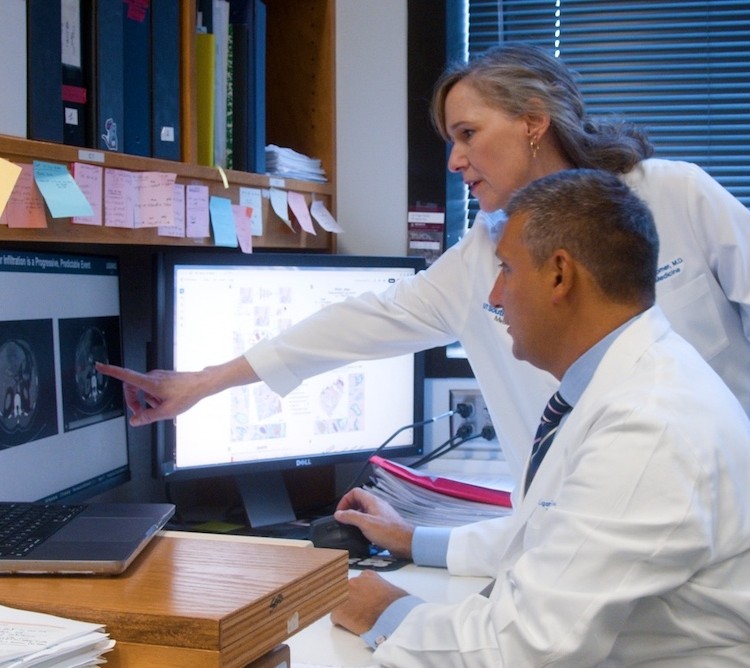
DALLAS – July 22, 2026 – Matteo Ligorio’s phone started buzzing just after 3 a.m. The texts from a hospice nurse indicated “Patient 14” had just passed away, which meant Dr. Ligorio and his team had less than four hours to honor her dying wish.
He pulled on his navy blue scrubs, climbed into his SUV, and sped through the mostly empty streets of Dallas to a clinic space operated by UT Southwestern Medical Center’s Willed Body Program. That’s where he would spend the next few hours performing a rapid autopsy designed to help answer one of the most enigmatic questions in modern medicine:
Why do people die from cancer?
Dr. Ligorio, a surgeon and researcher at UT Southwestern, believes he and his team have found the answer – and it’s probably not what you or most medical experts think.
“Macrovascular infiltration,” the phenomenon that occurs when cancer invades major blood vessels and unleashes clusters of circulating tumor cells (CTCs), marks the final physiological event before death from cancer, according to a one-of-a-kind study led and supervised by Dr. Ligorio and published in Nature Medicine. The CTCs form blood clots, triggering multiorgan failure, and that is the primary reason patients “die on one specific day rather than six months earlier or later,” he said.