
At VNA Hospice, we have the privilege of walking alongside people as they reflect on lives fully lived — lives marked by love, resilience, faith, and connection. Each person we serve carries a life story that stretches far beyond their current condition.
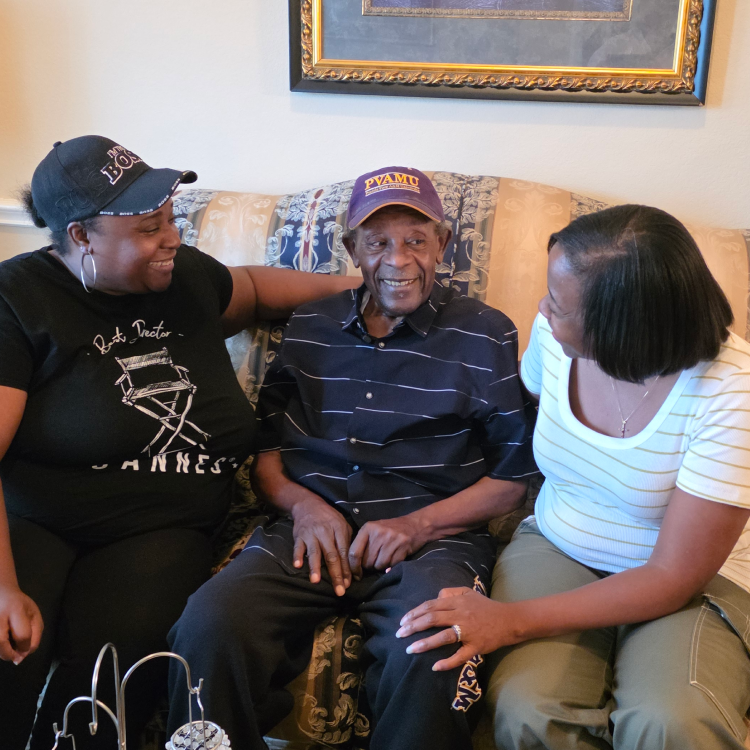
Pastor Leonard Davis was one of those storytellers. While receiving care through VNA Hospice, Leonard shared memories of a life shaped by humble beginnings, deep faith, and an unwavering commitment to family and generosity. His reflections were not about what he had lost, but about what he had gained — friendships that crossed differences, children and grandchildren who carried his values forward, and a belief that love and service leave footprints long after we are gone. This is Leonard’s story that he shared with us.
Leonard was born in 1936 during the Great Depression. His parents built a small two-room house where kerosene lamps provided light and a wood stove provided heat. He often said he grew up “in two rooms, not two bedrooms — two rooms,” and he said it with pride, not pity. He lived without modern utilities for the first sixteen years of his life. Yet when Leonard spoke of those years, he remembered love, discipline, laughter, and friendship.
He lived with his mother during the school year and with his father in the summers, drawing strength from both. They pushed education relentlessly, and because of that encouragement, Leonard became the first person in his family to graduate from high school, and then college. Segregation barred him from attending predominantly white Texas universities, but he was thrilled to be enrolled at Prairie View A&M at just sixteen years old, where he later graduated.
In the 1970s, Leonard felt a clear calling to ministry. He went on to serve as pastor of Galilee Baptist Church in Dallas for forty-one years and five months. His church reflected his values — welcoming, inclusive, and grounded in love.
But more than any title, Leonard was proudest of his family. He and his wife were married for 64 years, building a partnership rooted in faith and mutual respect. Together, they raised their children with intention, sacrifice, and unwavering belief in education. Leonard spoke about his children with unmistakable joy, describing their accomplishments not as luck, but as evidence of what happens when expectations are high and love is steady.
His children went on to remarkable careers, including public service at the national level. One son worked in the Obama administration, a moment Leonard never took lightly. Standing in a U.S. senator’s office, he marveled at the journey: “Somebody from Ore City, Texas, standing here? That’s something.”
His pride only grew with his grandchildren. He kept their photos close, reminders of how far the family had come. They earned degrees from institutions such as UT Austin, Austin College, Texas Tech, Columbia University, and Ivy League programs. Master’s degrees, professional careers, and lives of service filled him with quiet amazement. His great-grandmother had been born enslaved, lived to be 105, and held Leonard as an infant. Within just a few generations, his family had traveled from enslavement to leadership. “That’s not history in a book,” he said. “That’s right here. That’s my blood.”
Leonard lived for decades in Oak Cliff, raising all of his children in the same home. When they were grown, one of his sons insisted on moving Leonard and his wife somewhere safer and easier to manage. Leonard resisted at first — his house was paid for, and he didn’t need more. But he agreed, not for comfort or luxury, but because his children wanted to care for him the way he had always cared for them.
About 20 years ago, Leonard was diagnosed with prostate cancer. His daughter Kim was with him when the doctor delivered the news. Leonard remained calm. “If it hasn’t metastasized,” he said, “then what are our options?” He later stood before his church and told them not to cry. “Don’t you see me crying?” he said. “Jesus said we would have tribulation. I’m not exempt.”
As the years went on, Leonard faced radiation treatments, diabetes, chronic pain, and swelling in his feet. Still, his spirit never hardened. He had preached countless eulogies, married generations of families, and quietly helped people in need — sending money to charities, responding to images of suffering children on television, giving whenever he could. “I’m not rich,” he said. “But what I have, I’m going to share.”
In his final season of life, Leonard received care through VNA Hospice. Surrounded by family and supported with compassion and dignity, he reflected on his life with gratitude rather than fear. Even then, his faith remained steady. “Grass comes back,” he said. “Leaves come back. I believe I will too.”